
Map guide | Updated August 2026
Mistfall Hunter Map Guide: Maps, Key Routes and Extraction Tips
Use this Mistfall Hunter map guide to read map markers, key routes, safe exits, and solo or squad decisions without treating community data as official.
Quick answer: what the Mistfall Hunter map guide is for
The Mistfall Hunter map is most useful when you treat it as a decision surface rather than a promise that every run will follow the same route. Before entering, identify the objective, the likely return direction, and the information you still need. During the run, compare distance, cover, threat markers, loot value, and the time needed to reach an exit. The best route is often the one that leaves a credible way back, not the one with the most icons.
This page separates verified source facts from community map references. The official Steam listing establishes the game identity and extraction ARPG context. The interactive map and community Wiki are useful for locations, markers, keys, and route research, but their labels can change as players update them. Use them as current references, confirm important details in the live source, and avoid treating an old screenshot as a permanent patch record.
The practical goal is simple: turn map information into a safer choice for solo, duo, or squad play. Pick a role from the classes guide, set a build direction with the planner, then use the map to decide where to spend time and when to extract. This map guide does not invent coordinates, key locations, or party limits that the public sources do not verify.
What to check before following a map route
| Map signal | Question to ask | Practical decision |
|---|---|---|
| Objective marker | Does this location serve the run goal or only add distance? | Choose the shortest route that still leaves a return option. |
| Key or locked area | Is the key requirement current in the community source? | Verify the live marker before risking a valuable loadout. |
| Threat or event marker | Is the danger confirmed, recent, or only a player report? | Treat uncertain danger as a reason to slow down, not as a guaranteed fact. |
| Extraction point | Can the team reach it after one more fight? | Set a leave threshold before greed removes the safe exit. |
| Team route | Does every player know the next landmark and fallback? | Use short calls for place, threat, direction, and exit. |
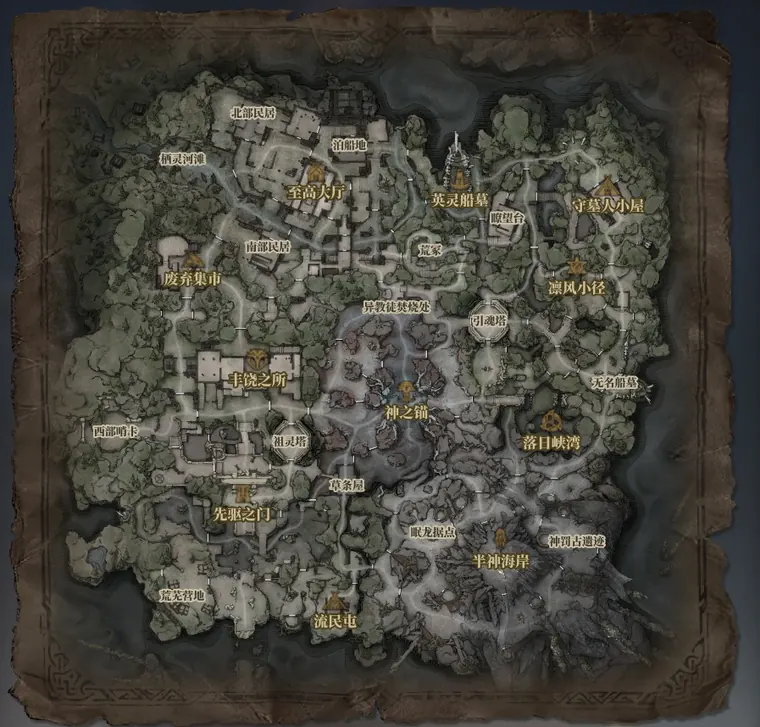
How to read Mistfall Hunter maps before a run
Start with a route skeleton instead of trying to memorize every marker. Pick an entry landmark, one useful destination, and one extraction direction. A skeleton gives you a way to interpret new information: if a fight closes the direct path, you already know which side route preserves the objective and which route only adds risk. This is especially helpful for beginners who lose time by opening the map repeatedly without deciding what they are trying to reach.
Use map detail to compare options, not to remove uncertainty. A key marker can tell you where a valuable door or objective may be, but it cannot guarantee that another squad will not arrive first or that the marker reflects the latest update. When information conflicts, prefer the live community source, record the date of your check, and plan as if the most valuable route will be contested. That keeps a useful marker from becoming tunnel vision.
The strongest map habit is an early extraction check. Ask how much inventory value you have, how many defensive resources remain, whether the next objective is on the way out, and whether everyone can communicate the fallback route. If the answer is weak, extracting is not giving up on the map; it is converting information into a successful run.
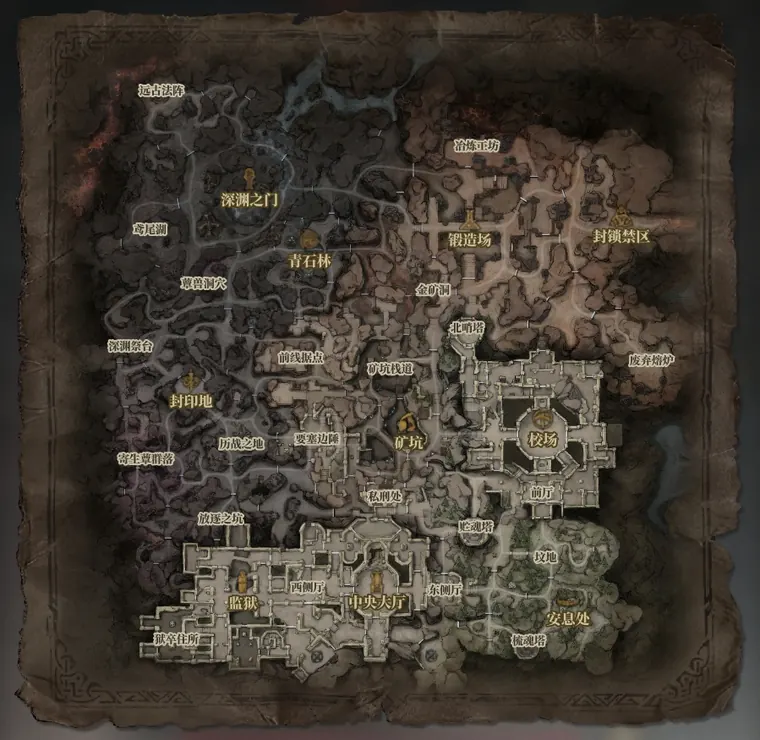
Solo, duo, and squad route examples
For solo play, value recovery and information more heavily than raw map coverage. Choose one destination, keep a route that avoids being trapped by a second fight, and leave when the objective and a reasonable haul are complete. Mercenary is a practical low-risk class direction from the site model because it leaves more room for correcting a route mistake. That does not make it an official best class; it simply gives a new player a clearer map-learning baseline.
For duo play, split information gathering without splitting so far that neither player can help. One player can read the next landmark while the other watches the likely approach, but both should agree on the same extraction threshold. If the map shows a tempting key route, decide in advance whether the key is the objective or an optional detour. A route that requires both players to cross an exposed area may be worse than a slower path with a reliable fallback.
For a squad, turn landmarks into communication points. Call the next location, the likely threat, the direction of movement, and the exit plan in that order. Control and utility classes can make a difficult map section more manageable, while a frontline class can hold space during a retreat. The map supports those roles; it does not replace the class guide or the team's actual knowledge of its gear and timing.
Route choice by player need
| Situation | Map priority | Useful site resource |
|---|---|---|
| First solo runs | Simple loop with an early fallback | Classes guide for a forgiving starting role |
| Searching for a key | Live marker, door requirement, and return route | Community map source linked below |
| Aggressive duo | Approach options and a shared extraction threshold | Build planner for role fit |
| Coordinated squad | Landmarks and fallback calls | Gameplay guide for extraction decisions |
| Busy queue window | Avoid predictable choke points when possible | Player-count guide for activity context |
Limits, map updates, and what not to assume
A community map can be excellent and still be incomplete. Marker names, key locations, event routes, and map availability may change after a patch or as players correct the database. The page you are reading records the check date and links to the public map source, but it cannot guarantee that a live marker will match your next instance. Open the source before a high-value run and report corrections through the source's own channel when available.
Do not use a map screenshot as proof of a permanent party limit, exact spawn rule, or guaranteed loot. Those claims need a current official or repeatable community source. The question-style keywords about players per map are useful FAQ candidates, but a responsible answer is to explain what can be verified and where to check, not to fill a missing number with a guess.
Map knowledge should also remain subordinate to the result you want. If the route has already delivered the objective, a safe extraction may be better than one more marker. If your squad has no fallback call or your class cannot recover from a bad fight, the correct map decision can be to leave.
Mistfall Hunter map FAQ
Where can I find a Mistfall Hunter map?
The public 射击虎 interactive map is linked in the sources below and includes map, key, task, and marker references. Check its live page because community labels can change.
Does this page provide an official Mistfall Hunter map?
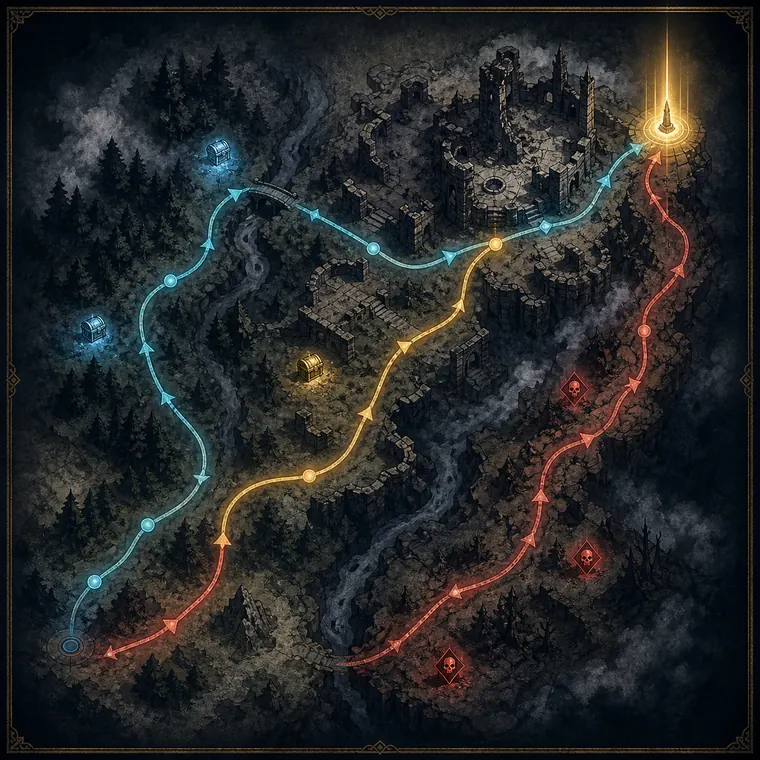
No. The two map images are community references and the route diagram is a conceptual illustration. The official Steam page is linked for product facts, not for unverified map coordinates.
What is a Mistfall Hunter key map used for?
Use a key map to locate a possible locked-area or key-related marker, then confirm the current requirement and plan a return route. Do not risk a valuable loadout from an old screenshot alone.
How many players can be on a Mistfall Hunter map?
This page does not invent a party or instance limit. Check current official information or a dated, repeatable community source; player-count signals on this site describe Steam activity, not a guaranteed map capacity.
Should I follow the map exactly in solo play?
No. Use it to choose a destination, compare a fallback, and decide when to extract. Solo routes need more recovery and information margin than a coordinated squad route.
Will this map guide stay accurate after a patch?
The route-reading method should remain useful, but markers and map facts can change. Recheck the linked community map and official sources before relying on a specific location.