
Gameplay guide | Updated August 2026
Mistfall Hunter Gameplay Guide: Extraction Loop and Beginner Tips
Learn Mistfall Hunter gameplay: the extraction loop, pre-run choices, combat timing, solo and squad roles, and beginner mistakes to avoid.
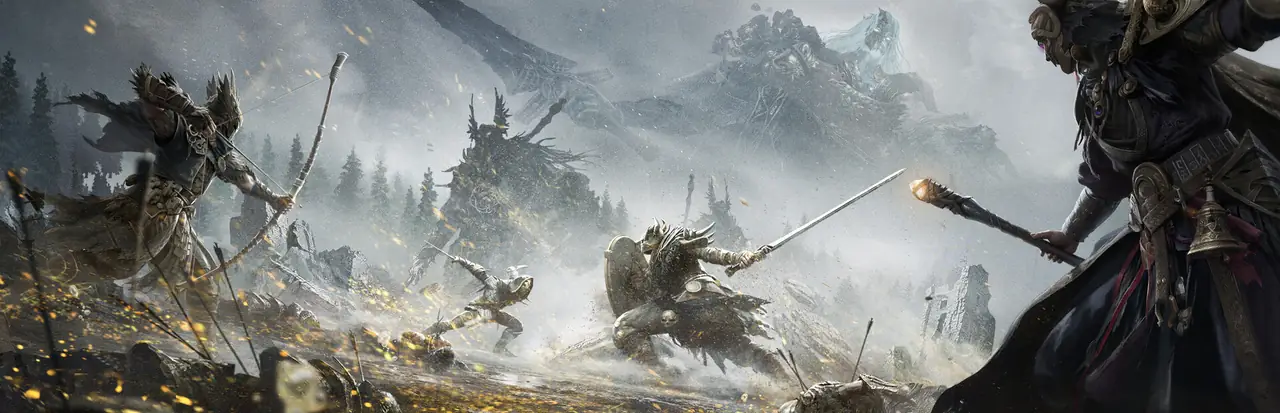
Quick answer: what is Mistfall Hunter gameplay?
Mistfall Hunter gameplay is built around an extraction loop: prepare a class and loadout, enter a dangerous PvPvE route, decide what risks are worth taking, and leave with enough value to make the next run stronger. The important skill is not simply dealing the most damage. It is knowing when information, positioning, and a safe exit are worth more than one extra fight.
That makes the game different from a linear campaign. A successful run is a chain of small decisions. You choose a role before entering, read the route while moving, decide whether a hostile encounter is favorable, protect the resources you have already earned, and adjust after the result. The loop stays interesting because the same class can feel safe in one group and exposed in another.
This page explains the gameplay structure rather than presenting a permanent tier list. The official Steam page is the place to verify product and platform facts. The class, player-count, price, and review guides on this site are supporting resources; they cover decisions around the loop without replacing current official or live third-party information.
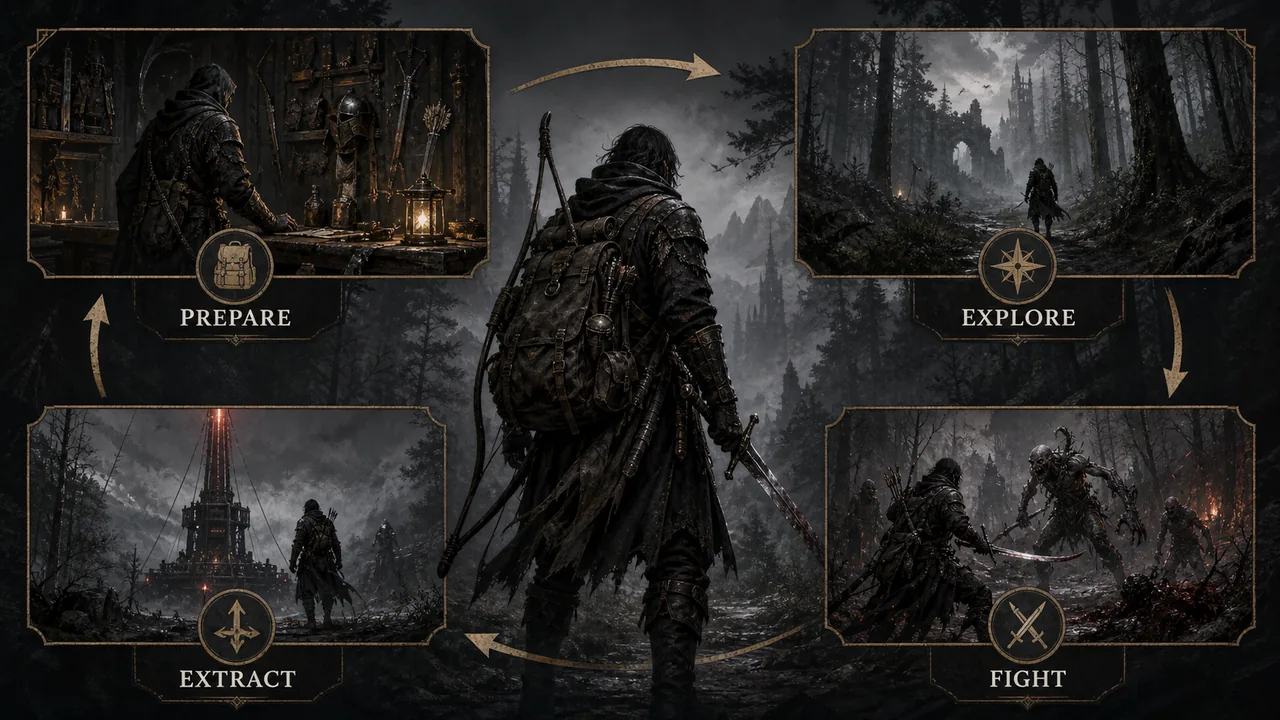
The Mistfall Hunter gameplay loop in five decisions
| Stage | What you decide | Why it matters |
|---|---|---|
| Prepare | Choose a class, role, and equipment you can explain | A clear job reduces hesitation when the route becomes noisy. |
| Enter and explore | Read the route, threats, and useful information | Early information helps you avoid bad fights and protect time. |
| Fight or avoid | Commit only when the position and reward make sense | Winning a fight is not useful if it consumes the resources needed to extract. |
| Extract | Leave before greed turns a good run into a loss | The exit converts temporary progress into a result you can build on. |
| Review | Keep one lesson and change one choice | Small adjustments teach the loop faster than rebuilding everything after every loss. |
Before a run: choose a job, not just a class
A useful beginner setup starts with a job statement. Say, for example, “I will hold space and survive mistakes,” “I will scout and pressure from range,” or “I will create control for the squad.” That sentence is more practical than copying a supposed best build because it tells you what to do when the situation stops looking clean.
The class guide is useful here because its roles are easier to compare than raw damage claims. Mercenary is a forgiving starting direction for players who want readable frontline pressure. Withered Knight suits an anchor who values durability and space. Blackarrow rewards distance and patient scouting. Shadowstrix and Sorcerer ask for better engage timing, while Seer gains value when information and safer squad decisions matter.
Match equipment to the job and keep the plan modest. Take enough tools to survive the route you intend to play, but do not treat every valuable item as a reason to take another fight. In a squad, agree on who starts an engagement, who watches the exit route, and who calls the retreat. In solo, replace that conversation with a visible personal rule: leave when the next risk is larger than the value already secured.
What happens during exploration?
Exploration is the information phase of Mistfall Hunter gameplay. Move with a destination rather than wandering until the route becomes crowded. Notice what the environment tells you about recent activity, possible threats, and the time you still have to reach a safe exit. You do not need perfect knowledge of a map to make a better choice; you need enough information to compare two routes.
Loot creates the central temptation. Valuable finds can improve later runs, but carrying more value also makes a careless decision feel more expensive. Treat every pickup as part of a risk budget. If the inventory already contains what the run needed to accomplish, a safer path out can be the correct gameplay decision even when the next room looks attractive.
The best exploration habit is to create options. Keep a route back, avoid spending every defensive tool early, and do not enter a fight from a position you cannot leave. When a team moves together, information should travel faster than the player who discovered it. Clear short callouts such as location, threat, direction, and exit plan prevent the group from turning a small surprise into a full wipe.
Solo, duo, and squad gameplay compared
| Format | Main strength | Main pressure | Good starting habit |
|---|---|---|---|
| Solo | Fast decisions and full control | No teammate can recover a bad position | Choose a forgiving role and keep an exit rule. |
| Duo | Shared pressure and flexible coverage | Two players can split attention too far | Move with a clear pair job: scout, anchor, or finish. |
| Squad | Information, control, and role coverage | Noise and hesitation grow with the group | Assign a caller and repeat the retreat plan before a fight. |
Combat and extraction: leaving is part of winning
Combat is only one part of the gameplay loop. Before committing, check three questions: can the team start from a good position, what happens if another threat arrives, and can everyone still reach an exit after the fight? A clean fight with no route home is not clean. This mental check is especially useful for new players who confuse activity with progress.
When a fight starts, give the team one simple priority. Focus the exposed target, protect the player carrying the most value, or create enough space to disengage. Avoid changing the priority every few seconds. A class with control or information may be doing its job even when its damage number is not the highest, because it makes the squad's next decision safer.
Extraction should be treated as a scheduled decision, not an emergency button. Leave when the goal is complete, when resources are running low, or when the next encounter would require a lucky outcome. The player who extracts with a smaller reward and a clear lesson often progresses faster than the player who repeatedly loses a full loadout chasing one more highlight.
How classes change the gameplay rhythm
Classes do not just change damage; they change what the player can afford to risk. A frontline class can spend more attention on holding a route because it has a clearer recovery plan. A ranged or scouting class can trade direct pressure for information and distance. A burst class can end a favorable engagement quickly, but it usually pays more when the timing or position is wrong.
Use the build planner after you understand the job you want to perform. For a first solo route, a lower-risk class gives you more room to learn extraction decisions. For a fixed squad, the missing role may be more valuable than the class with the most exciting description. If the group already has damage, control or information can improve the entire run even when it looks less dramatic on a comparison table.
There is no need to lock one class forever. Play several runs with one purpose, record the moment the plan broke, and change one variable at a time. This keeps your conclusion useful after balance changes. The class page and planner are starting points for a testable direction, not official patch notes or a promise that one class will always be best.
Common beginner mistakes in Mistfall Hunter gameplay
The first mistake is treating every encounter as mandatory. Extraction gameplay rewards selective pressure. If the reward is small, your position is exposed, or the team has no exit plan, walking away is a successful decision. The second mistake is changing the entire build after one failed run. A single loss may show a positioning problem, not a class problem.
Another common error is carrying a plan that the group never stated aloud. A player may be scouting while another expects a direct fight, or one teammate may retreat while the other assumes the engagement is only starting. Use short, repeatable calls and decide who makes the final go-or-leave call. Coordination improves gameplay without requiring a perfect loadout.
Finally, do not use a permanent review, player count, or price snapshot as a substitute for your own fit. Check current store facts on Steam, read recent activity signals, then test whether the extraction loop is enjoyable in the format you actually play. The goal of a gameplay guide is to make that test clearer, not to remove all uncertainty.
Mistfall Hunter gameplay FAQ
What kind of game is Mistfall Hunter?
Mistfall Hunter is presented here as a PvPvE extraction ARPG: you prepare a run, enter a dangerous route, make combat and risk decisions, then try to extract with useful progress. Check the official Steam page for current product facts.
What is the main Mistfall Hunter gameplay loop?
Prepare a class and loadout, explore, decide which encounters are worth taking, secure value, extract, and use one lesson to plan the next run. The loop is about risk management as much as combat.
How do you extract in Mistfall Hunter?
Treat extraction as a decision you plan before the route becomes desperate. Keep an exit option, stop when the run has achieved its purpose, and leave when the next fight costs more than the progress already secured. Use current in-game instructions for exact locations or controls.
Is Mistfall Hunter gameplay better solo or with a squad?
It depends on what you enjoy. Solo gives full control but no recovery from a bad position. Squads add information and role coverage but require clear calls. Start with the format you can play consistently, then use the class guide to fill its biggest weakness.
Which class is best for Mistfall Hunter gameplay beginners?
Mercenary is the site's lower-risk starting direction because its frontline job is easy to understand. Withered Knight is another practical option for players who want to anchor a squad. These are editorial starting points, not an official tier list.
Where can I check official Mistfall Hunter information?
Use the official Steam page for platform, product, and store facts. SteamDB can provide a third-party player-activity signal. The related class, build, price, player-count, and review pages explain how to use those resources without treating them as permanent facts.