
Duo mode guide | Updated October 30, 2026
Mistfall Hunter Duo Mode: Roles, Calls, and Extraction
Plan a Mistfall Hunter duo run with complementary roles, short calls, reset rules, route checks, and extraction decisions grounded in current source limits.
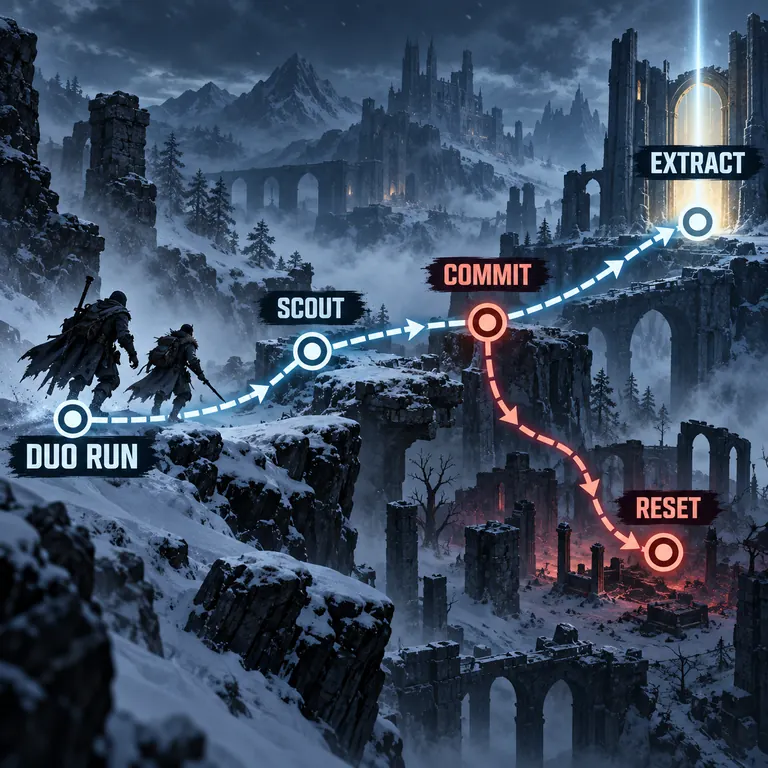
Quick answer: duo mode is a two-job communication test
The useful way to approach Mistfall Hunter duo mode is to give two players different jobs before the run starts. One player may create information or ranged pressure while the other holds space, protects the retreat, or decides when the pair has spent enough resources. The exact mode selector, matchmaking rules, and progression behavior can change, so verify the live game menu after updates. This guide treats duo as a two-player run format, not as proof of a permanent dedicated queue.
A duo is smaller than a squad but less forgiving than a solo run. Every missing role is visible, and a bad call is harder to hide behind extra bodies. The pair needs a shared destination, a short contact call, and a clear reset signal. Those three agreements reduce hesitation when a route becomes noisy or a fight stops being favorable.
The goal is not to force every encounter. A successful duo run converts information into a safe exit. If both players chase damage, split around a corner, or keep looting after the objective is already good enough, the pair loses the advantage of coordination. Start with a simple plan that both people can repeat, then change one variable after each failed extraction.
Mistfall Hunter duo mode at a glance
| Decision | Duo default | Why it matters |
|---|---|---|
| Before queue | Choose two complementary jobs | Two players cannot cover every role at once. |
| Opening route | Pick a destination and a fallback | A shared route prevents silent separation. |
| First contact | Use one short call and pause | The pair needs the same information before committing. |
| After a win | Reset health, position, and noise | A won fight can still leave a bad exit. |
| Extraction | Leave when the objective is enough | Duo value disappears quickly when greed creates a second fight. |
What changes when you play as a duo
In solo, every decision is yours and your route can stay quiet. In a duo, movement itself becomes a resource. Two players make more sound, need more space, and can expose each other when they cross the same doorway. That does not mean the pair should move slowly everywhere. It means the pair should decide when speed creates safety and when speed removes information.
The strongest duo plans use asymmetry. A player who scouts does not have to be the player who starts every fight. A player who anchors space does not have to be the person who carries every valuable item. Separate the job from the reward so the pair can keep functioning when the first plan breaks.
Keep assumptions visible. The official Steam listing identifies Mistfall Hunter as a PvPvE extraction game, but a store description does not document every duo rule, map marker, ping range, or loot interaction. When a mechanic is not verified, use a conservative plan: stay close enough to trade information, keep a fallback route, and leave before an optional objective becomes a forced fight.
Give each player one primary job
Use plain language such as scout, anchor, burst, control, or extraction caller. A primary job makes a messy fight easier to read without pretending that a class has only one use.
Share facts, not guesses
Say what you saw, where it was, and what changed. ‘Two players near the arch’ is a better call than a confident claim about their health or cooldowns that you cannot verify.
Agree on the stop signal
Choose a word or observable condition that means stop chasing, regroup, or extract. The signal matters most when the pair is excited after a win.
Choose complementary duo roles
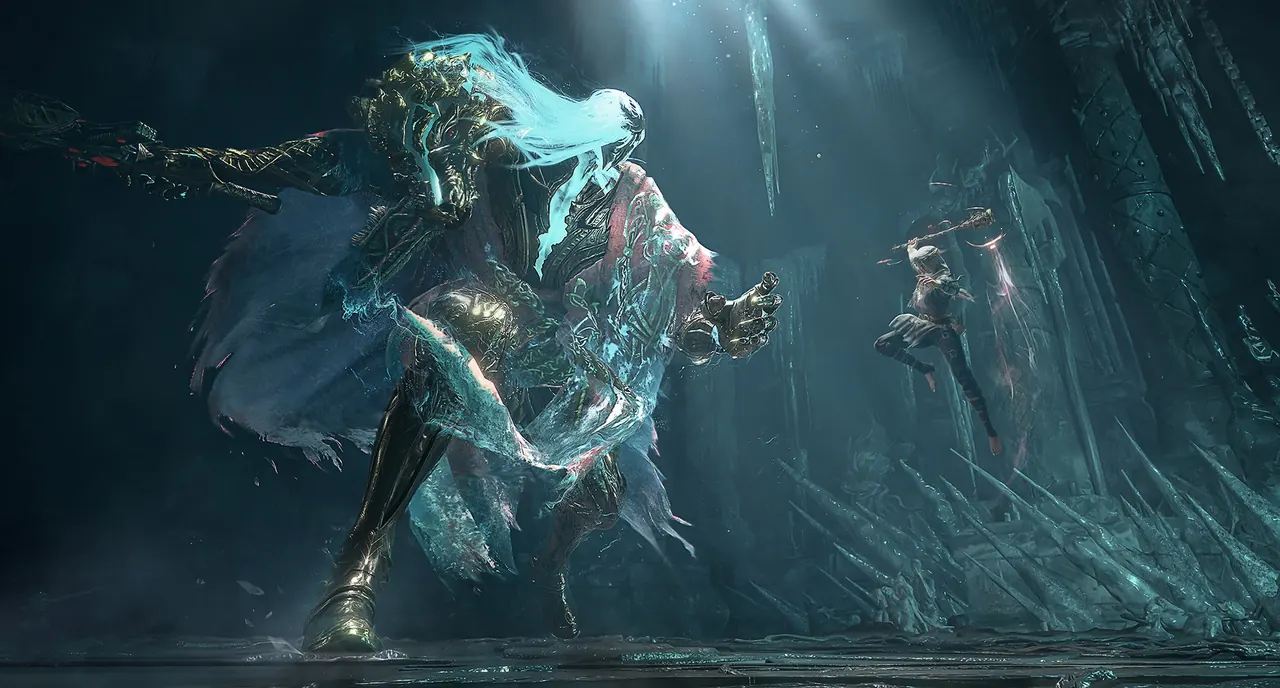
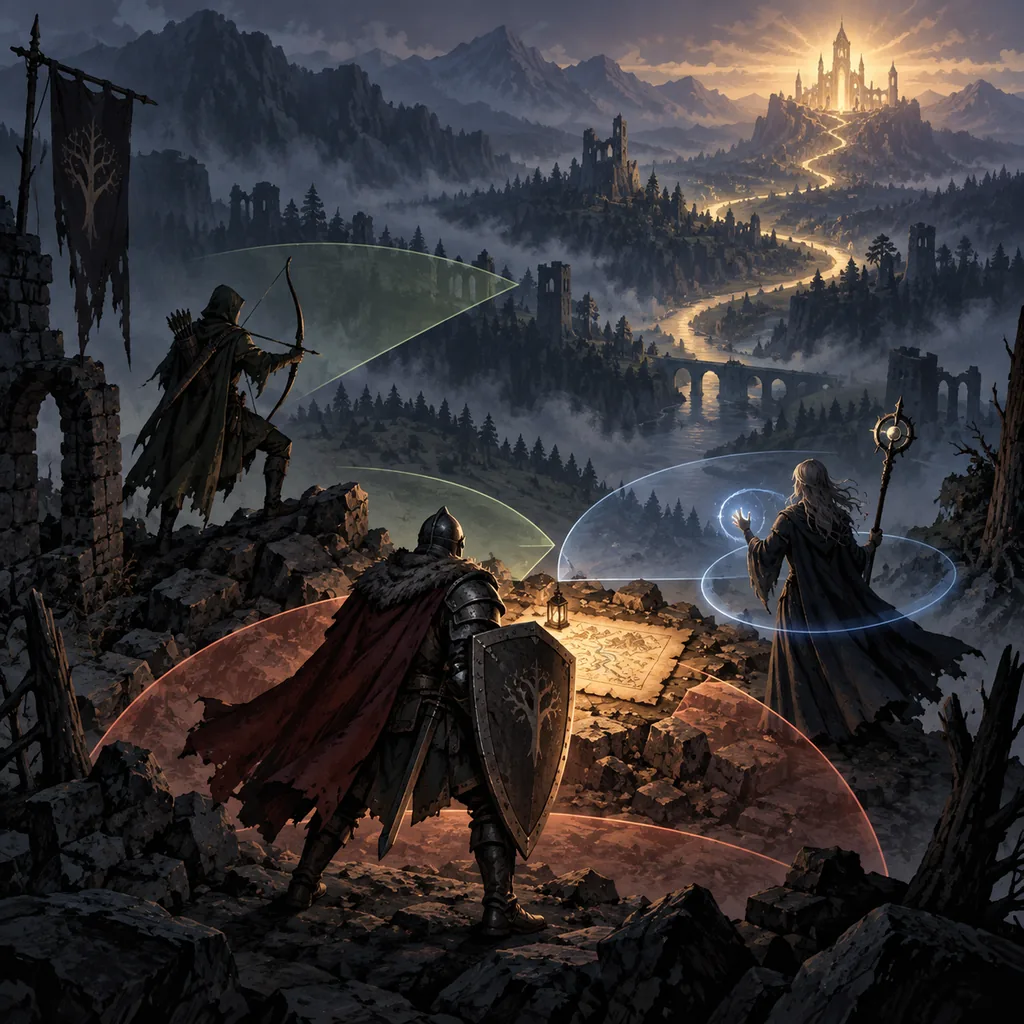
Blackarrow plus Withered Knight is a readable starting pattern when one player wants range and information while the other wants to hold space. The pairing is not a tier-list verdict. It simply makes the jobs easy to describe: one player looks for a favorable angle, the other keeps the retreat available. If either player moves outside the other’s information, the pairing loses its safety.
Mercenary plus Seer is another forgiving direction for players learning the loop. Mercenary can make a frontline decision legible while Seer contributes information and control that helps the pair avoid a bad commitment. The pair still needs a retreat rule; utility cannot repair a route that has already become surrounded.
Shadowstrix or Sorcerer can create a sharper win window, but the duo must decide what happens when the first burst fails. A high-risk pair should not rely on improvising a second engage while injured. Keep one reset option, one fallback angle, and one reason to leave. The class guide and builds guide explain role assumptions in more detail; this page focuses on how two people coordinate them.
Range plus anchor
Use one player to read sight lines and one to make the space around the pair safer. The call is complete only when both players know where the fallback is.
Frontline plus information
A durable player creates time while the information player turns that time into a route or an avoided fight. Do not send the information role so far ahead that the pair loses its trade window.
Burst plus reset
Commit to a short window, confirm the result, then reset. If the target survives and the pair has no clean exit, the correct duo decision is usually to disengage rather than prove the first call right.
Duo pairing patterns and tradeoffs
| Pairing idea | Best use | Tradeoff |
|---|---|---|
| Blackarrow + Withered Knight | Range, scouting, and space | The ranged player must keep a retreat angle. |
| Mercenary + Seer | Beginner routes and safer calls | The pair may lack fast finishing pressure. |
| Shadowstrix + anchor | One short ambush window | The anchor must know when to stop the chase. |
| Sorcerer + frontline | Zone pressure around a planned fight | Cooldowns need a second layer for retreat. |
A short call protocol for every duo run
Before moving, say the destination, the fallback, and the condition that ends the route. This can be a single sentence: ‘We check the north structure, fall back to the bridge, and leave after the objective.’ The sentence is useful because it gives both players permission to stop without winning an argument in the middle of a fight.
At first contact, name the observable fact and the decision window. A good call is short enough to repeat: ‘contact left, hold,’ ‘two near the wall, rotate,’ or ‘no angle, reset.’ Do not fill voice chat with a story about what the other team might be doing. The pair needs information that changes the next movement.
After a fight, run a reset checklist: health or recovery state, remaining cooldowns, teammate location, noise or attention, and the nearest exit. If one of these is unknown, pause before looting. A reset is not wasted time; it is how the duo turns a successful contact into a successful extraction.
When the objective is sufficient, leave. The duo guide’s central rule is simple: do not turn coordination into shared greed. Mark the point where the run is already worth keeping, then treat extra loot or a second fight as an optional trade that must earn its risk.
1. Plan
Destination, fallback, and stop signal before the first route split.
2. Scout
Keep one player gathering information while the other stays close enough to respond.
3. Commit
Enter only when both players understand the target, angle, and exit.
4. Reset or extract
After the first result, recover and leave if the next decision is not clearly favorable.
How to improve after a failed duo extraction
Change one variable at a time. If the pair changes class, route, gear, and call vocabulary together, the next run cannot explain what improved. Keep a short note with the format, first contact, first broken agreement, and the moment the exit became unsafe. That is enough to find a repeatable failure.
If the pair keeps splitting, shorten the route and make the fallback physical: a doorway, bridge, or visible landmark rather than an abstract direction. If the pair wins fights but loses the kit afterward, move the extraction trigger earlier. If the pair never starts a favorable fight, use more scouting and stop treating every objective as urgent.
Recheck this page after verified balance notes or mode changes. The recommendation is an editorial framework, not an official rulebook. The live Steam page remains the source for product identity and platform facts, while the existing map, PvP, builds, and crossplay guides provide narrower supporting context.
Mistfall Hunter duo mode FAQ
Does Mistfall Hunter have a duo mode?
The site uses duo as a two-player run format because the planner and related guides support solo, duo, and squad decisions. Check the current in-game mode selector after updates; this page does not claim that a permanent dedicated queue or matchmaking rule is guaranteed.
What is the best Mistfall Hunter duo class combination?
There is no universal best pair. Blackarrow plus Withered Knight is easy to explain as range plus space, while Mercenary plus Seer gives newer players a forgiving frontline and information pattern. Choose the pair whose jobs and exit signal your team can repeat.
How should two players communicate in Mistfall Hunter?
Use short calls built from observable facts: location, number of contacts, angle, and the next movement. Agree on a stop or extract signal before the run so one player can end a chase without debate.
Should a duo split up to loot?
Only when the route and fallback are still safe and both players can share information. If splitting removes the ability to trade a fight or regroup quickly, the extra loot is usually not worth the risk.
What should a duo do after winning a fight?
Reset health, cooldowns, position, teammate location, and exit information before looting. If the objective is already enough, extract; a second fight should be an explicit risk decision rather than an automatic continuation.
Is this a duo build page or a build planner?
No. The build planner recommends a class direction interactively, and the builds guide explains class priorities. This page focuses on the coordination layer that appears when two players share one route and one extraction decision.